

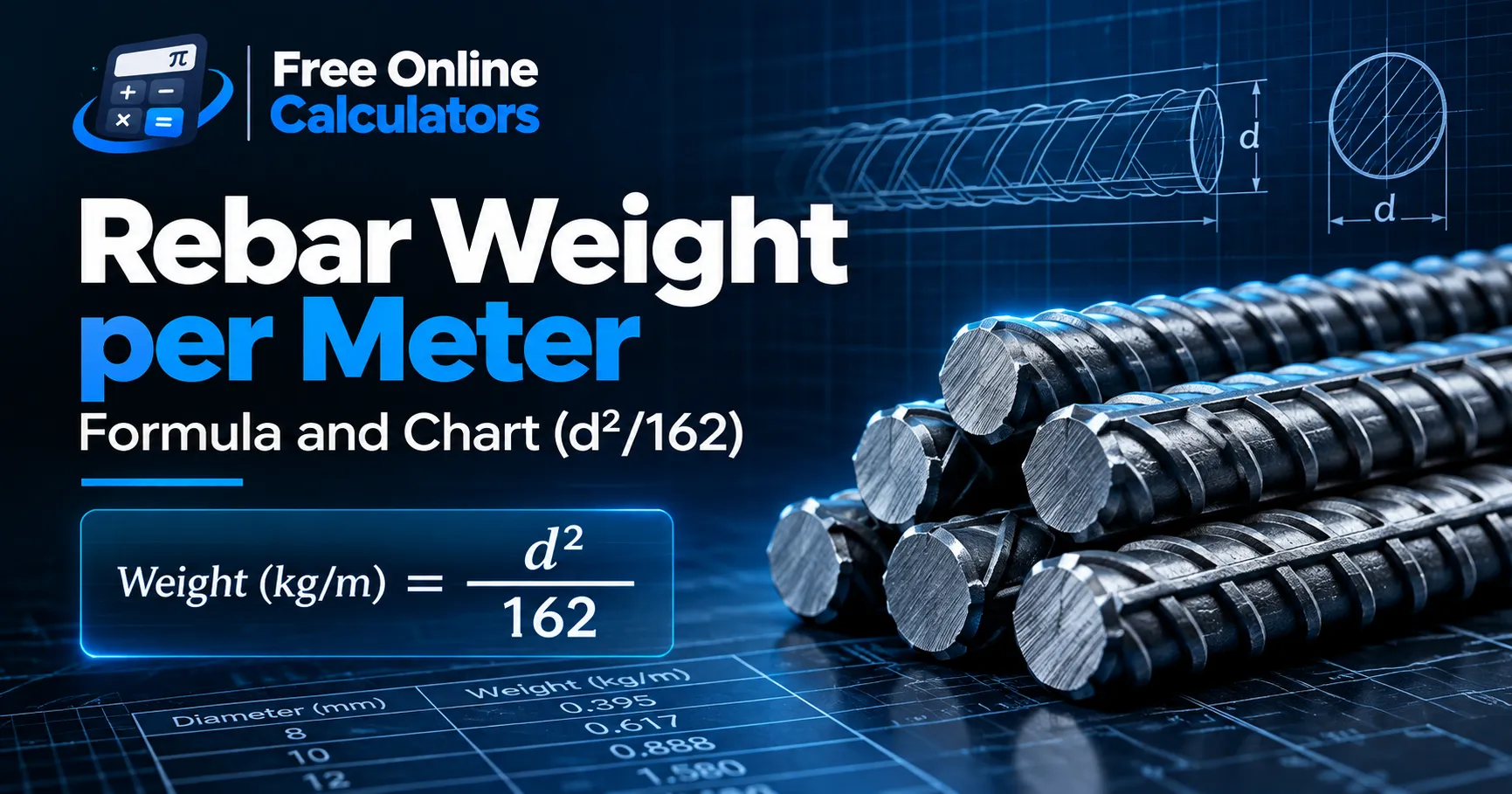
Rebar Weight per Meter: Formula and Chart (d²/162)
Steel rebar is ordered and priced by weight, so knowing the weight per meter of each bar size is essential for a takeoff. This guide gives the formula, a chart, and where the tidy constant comes from.
The rebar weight formula
Steel rebar weight per meter reduces to a simple shortcut:
Weight (kg/m) = d² ÷ 162
d is the bar diameter in millimetres. The 162 folds in the steel density of about 7,850 kg per cubic metre and the unit changes. Multiply the weight per meter by the length and the number of bars for the total. The rebar weight calculator does this for any size.
Worked example
A 12 mm bar: 12² ÷ 162 = 0.888 kg/m. A 12 m length weighs 0.888 × 12 = about 10.65 kg.
Steel rebar weight per meter chart
Nominal weight per meter for common sizes: 8 mm is 0.395 kg/m, 10 mm is 0.617, 12 mm is 0.888, 16 mm is 1.580, 20 mm is 2.469, and 25 mm is 3.858. Because weight follows the diameter squared, a 25 mm bar weighs more than six times a 10 mm bar even though the diameter is only two and a half times larger.
Where 162 comes from
Take the round area, π/4 times the diameter squared, multiply by the density, and simplify the units, and it collapses to d² ÷ 162 in kilograms per metre. Grade does not change it, since mild and high yield steel share the same density.
From count to weight
To count the bars first, the rebar calculator lays out the spacing, and this weight formula turns that layout into a delivery figure.
For plain round bar of any size, the round bar weight calculator uses the same math.
Common mistakes
- Using an odd diameter. Enter the nominal size stamped on the bar.
- Adjusting for grade. Mild and high yield steel weigh the same.
- Forgetting laps. Add a few percent for laps and offcuts.
Quick reference
Rebar weight: kg/m = d² ÷ 162. A 12 mm bar is 0.888 kg/m. Get any size from an online calculator on CalculateGuide.